Abdominoplasty, breast surgery, liposuction and diastasis repair: the procedures combined within a personalised protocol.
The Mommy Makeover is not a single procedure but the considered combination of several plastic surgery procedures. These are the four procedures most often brought together in this body contouring surgery protocol. During the consultation, Dr Paul Seknadje determines which ones are relevant to your situation.
Abdominoplasty / Tummy Tuck
The abdominoplasty removes the excess of stretched skin from the lower abdomen and tightens the slackened abdominal wall, as the rectus muscles are permanently separated: this is the well-known diastasis. It treats the abdominal overhang and the stretch marks located below the navel. It is often the central procedure of a Mommy Makeover, as the abdominal area is the most affected by motherhood.
After breastfeeding, the breasts may lose volume and firmness or become slack. Depending on the case, an augmentation with implants, more or less combined with a lift (ptosis correction), restores contour and support. But it may also be a breast reduction: many women keep a large, heavy and burdensome bust after pregnancy. The choice depends on the quality of the skin, the residual volume and your wishes.
Liposuction removes localised fat deposits that resist exercise around the waist, the hips or the saddlebags. It refines the figure and redraws the contours to complement the other procedures of the Mommy Makeover, for overall harmony.
During pregnancy, the rectus abdominis muscles separate: this is diastasis, responsible for a belly that stays bulging despite exercise. Dr Paul Seknadje re-tensions the abdominal wall and closes this separation, a surgical procedure most often combined with abdominoplasty. This muscle repair benefits from the Rectus Block, an anaesthesia technique that makes recovery near painless (see below).
The exact combination of procedures, their order and any staging are decided with the surgeon, according to your anatomy, your state of health and your expectations. The statutory 15-day reflection period applies before any procedure.
The technical point
The Rectus Block: a "morphine-free" abdominoplasty
The Rectus Block is not a surgical technique, but a regional anaesthesia technique. Post-operative pain is the main concern of patients considering an abdominoplasty with diastasis repair, as this procedure involves significant manipulation of the muscle wall. The Rectus Block radically changes this experience and allows near painless recovery.
The surgeon carries out the muscle repair; the Rectus Block, for its part, removes the pain of it.
What does it involve?
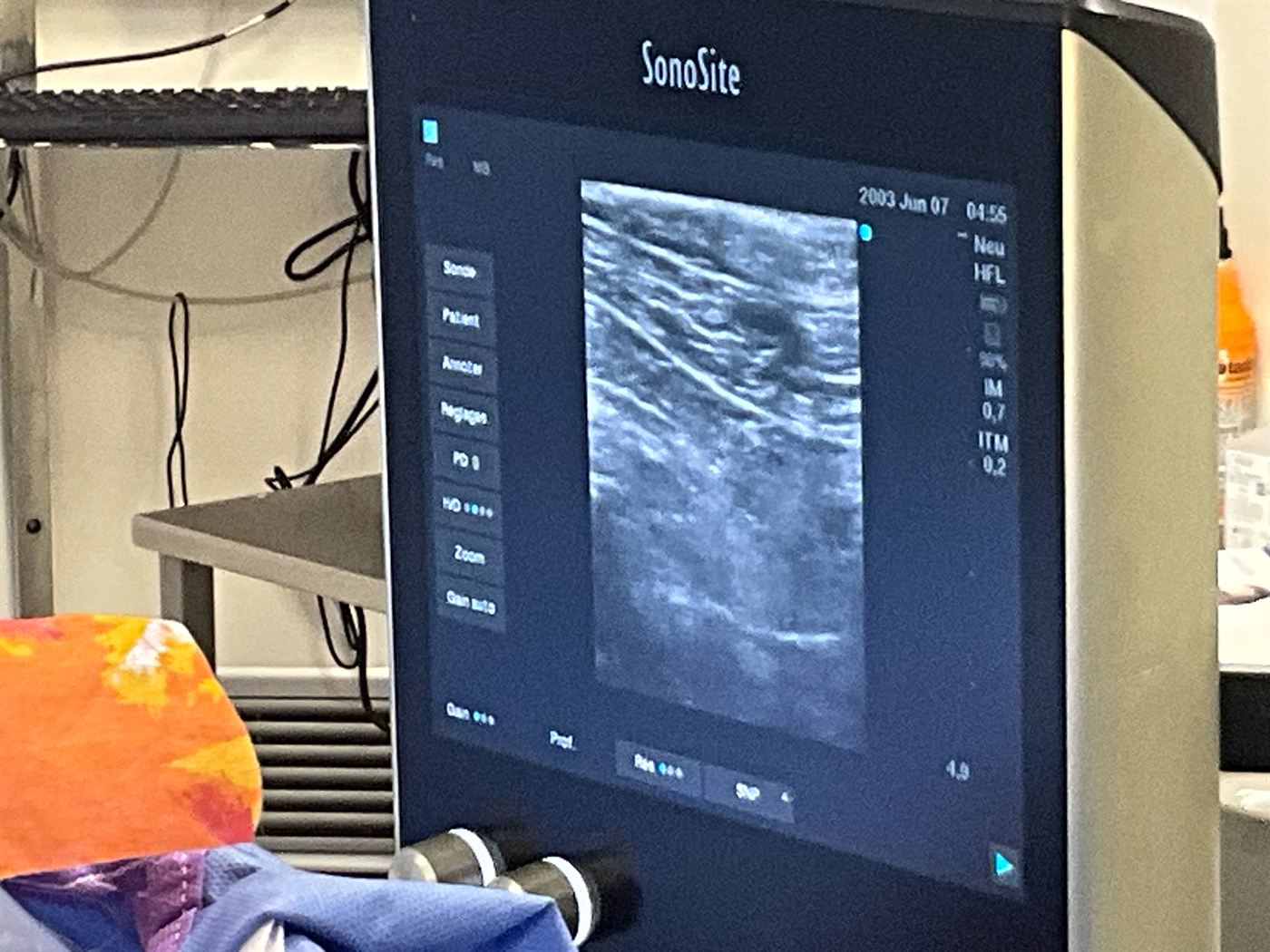
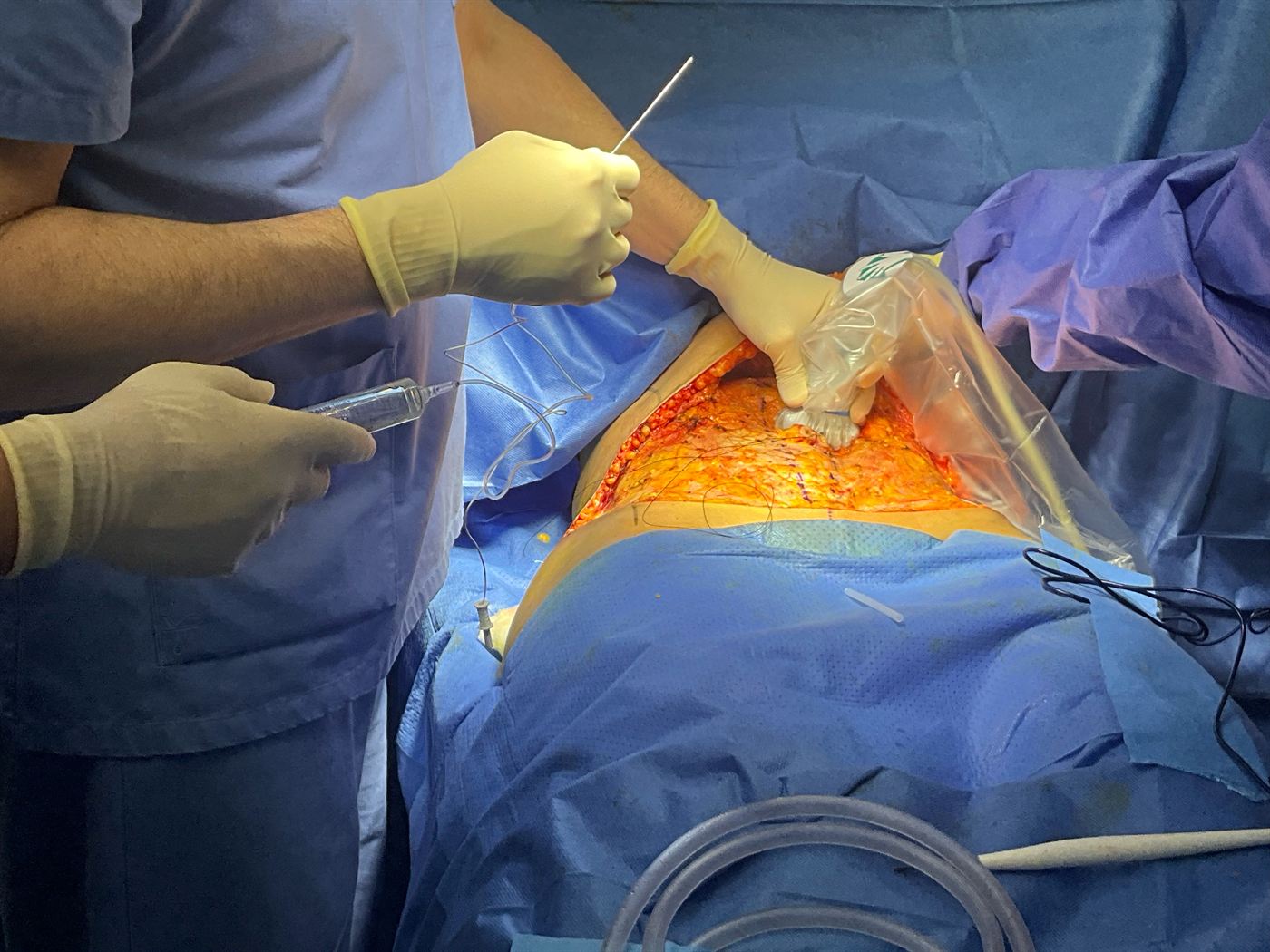
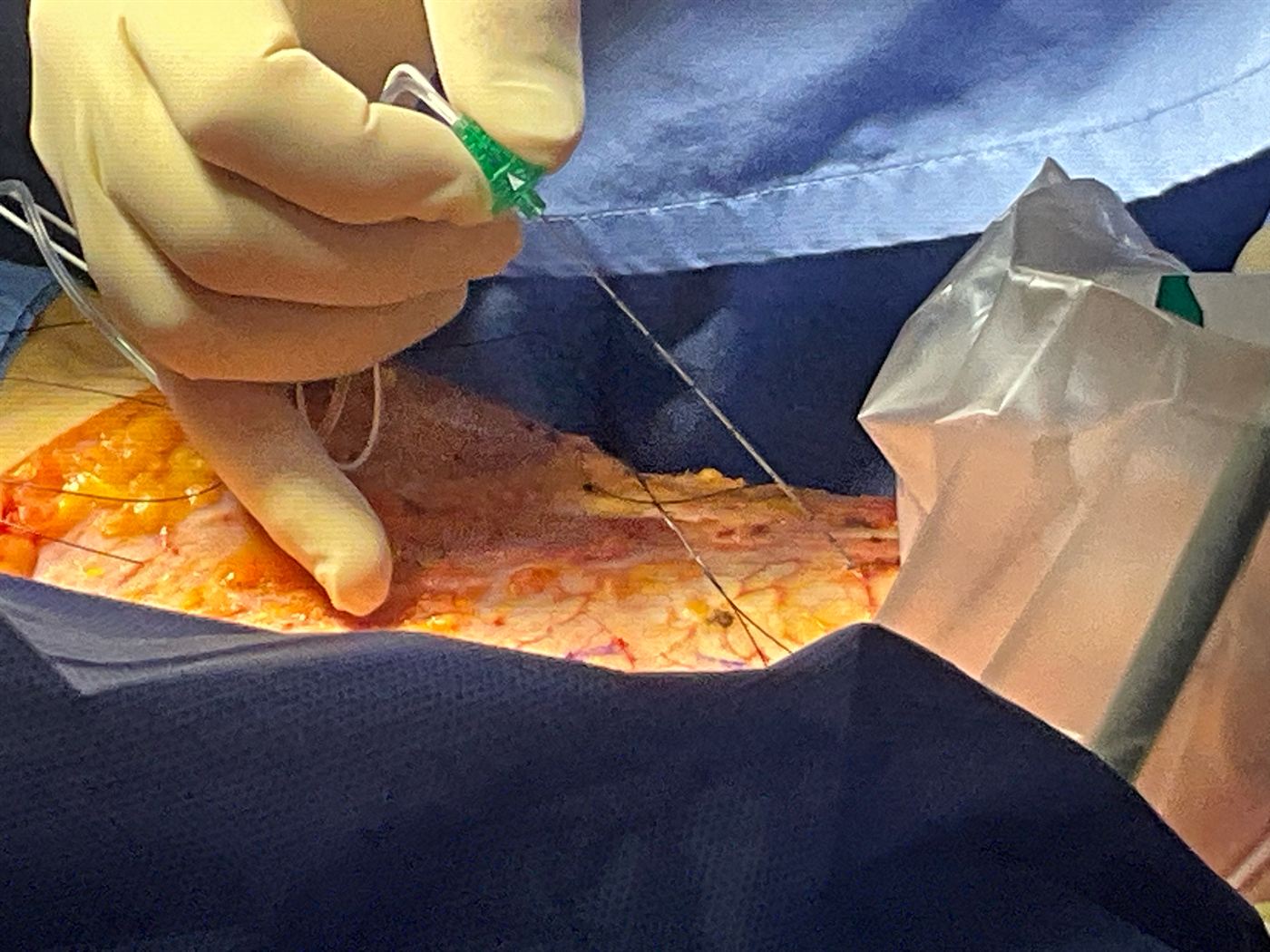
The Rectus Block, or block of the sheaths of the rectus abdominis muscles, involves injecting a local anaesthetic (ropivacaine or bupivacaine) between the rectus muscle and its sheath, under ultrasound guidance. It blocks the transmission of pain signals from the repaired abdominal wall. Carried out during the procedure by the anaesthesia team, in the open field and under ultrasound, it takes only about ten minutes and ensures pain control during the first 24 to 48 hours, the most critical period.
Ultrasound guidance (SonoSite): the injection plane, between the rectus muscle and its sheath, is visualised in real time.
The Rectus Block being carried out in the open field, at the end of the procedure, by the anaesthesia team.Injection of the local anaesthetic against the muscle sheath, under ultrasound control.
A "morphine-free" approach to care
By controlling pain from the moment of waking, the Rectus Block makes it possible to avoid the use of opioids and their side effects:
post-operative nausea and vomiting;
constipation and sub-obstruction;
drowsiness and confusion;
respiratory depression.
Getting up for the first time is significantly easier and the rare residual pains respond to simple painkillers such as paracetamol. This approach forms part of an enhanced recovery after surgery (ERAS) pathway, which encourages an early return home, most often as soon as the day after the procedure.
A systematic technique at the Parc Monceau clinic
Dr Paul Seknadje systematically performs the Rectus Block for his abdominoplasties with abdominal wall repair, in collaboration with the anaesthesia team of the Clinique Internationale du Parc Monceau, in Paris 17.
This website uses only anonymised audience-measurement cookies to improve your experience. If you decline, no statistics script is loaded. Learn more.
A question about the Mommy Makeover?
Leave your details: Dr Paul Seknadje's secretariat will contact you within 24 to 72 hours to answer your questions and, if you wish, arrange a consultation.